Preop planning
What: Assess defect size, location, recurrence, contamination, and patient optimization.
Why: Plan approach and mesh plane.
Pitfalls: Ignoring optimization increases recurrence/infection.
Defect measurement, mesh planes, recurrence risk, complications, 2023+ CPT documentation, and wRVUs.
Ventral hernia repair restores abdominal wall integrity for primary or incisional hernias. Modern coding depends on defect size, reducible versus incarcerated or strangulated status, initial versus recurrent repair, and approach. The operation is a planning case: anatomy, mesh plane, patient risk, and documentation drive outcomes.
Symptomatic ventral or incisional hernia
Enlarging defect
Incarceration or obstruction
Skin compromise or functional limitation
Selected recurrent hernia
Optimization before elective repair when possible
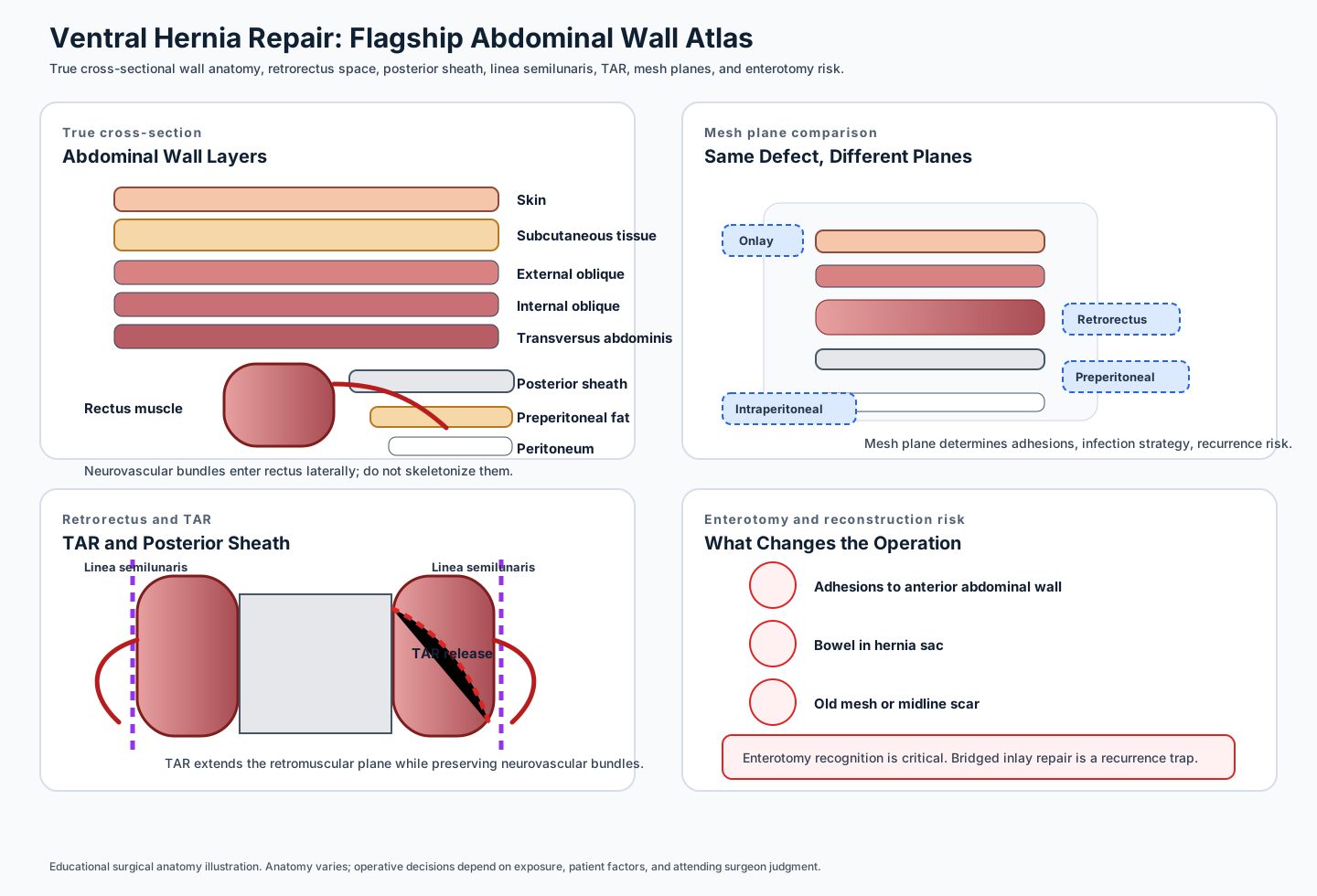
Linea alba and anterior/posterior rectus sheath
Rectus muscle and neurovascular bundles
Preperitoneal, retrorectus, intraperitoneal, and onlay planes
Hernia sac, fascial edges, and multiple swiss-cheese defects
Semilunar line and lateral abdominal wall
What: Assess defect size, location, recurrence, contamination, and patient optimization.
Why: Plan approach and mesh plane.
Pitfalls: Ignoring optimization increases recurrence/infection.
What: Open, laparoscopic, or robotic access based on case.
Why: Safe entry avoids bowel injury.
Pitfalls: Adhesions under prior incision are common.
What: Free contents and reduce hernia sac.
Why: Defines defect and protects bowel.
Pitfalls: Thermal or traction injury to bowel is a major risk.
What: Measure total defect width/length after reduction.
Why: CPT selection depends on documented size.
Pitfalls: Using skin bulge instead of fascial defect is wrong.
What: Create selected mesh plane.
Why: Mesh position affects recurrence and complications.
Pitfalls: Lateral dissection can injure neurovascular supply.
What: Close fascia when appropriate and place mesh with adequate overlap/fixation.
Why: Restores abdominal wall and lowers recurrence.
Pitfalls: Bridging without reason increases recurrence.
What: Manage dead space, drains if used, close layers.
Why: Prevents hematoma/seroma and wound problems.
Pitfalls: Tension and devascularized flaps cause complications.
Click any card to reveal the answer. Use filters for level-specific review or Quiz Mode for one-question-at-a-time board prep.
Realistic case stems that teach operative judgment, prioritization, bailout thinking, and documentation discipline.
These cases are educational examples for surgical learning and documentation awareness. They are not patient-specific medical advice. Actual management depends on patient physiology, anatomy, local resources, attending judgment, and institutional protocols.
Scenario: multiple small midline defects are found instead of one defect. Reduce contents, define all fascial defects, measure the total repaired defect area according to current coding rules, choose a mesh strategy with adequate overlap, and document the measurement clearly.
Seroma: recognize fluid collection; prevent by dead-space management; observe or drain if symptomatic/infected.
SSI/mesh infection: recognize erythema, drainage, systemic signs; prevent by optimization and sterile technique; manage with antibiotics, drainage, or mesh removal when necessary.
Bowel injury: recognize enterotomy or postop sepsis; prevent with careful adhesiolysis; repair immediately when identified.
Recurrence: prevent with optimization, adequate overlap, closure, and plane selection; manage based on symptoms and risk.
Chronic pain: prevent nerve-aware fixation; manage with multimodal therapy and evaluation.
Values below are pulled from the FreeCPTCodeFinder CPT database at runtime so RVUs and estimated Medicare payments stay aligned with the coding engine.
Educational guidance only. This section is not a complete dictated operative note and should not be copied into the chart.
Optimization matters
Measure the actual fascial defect
Respect bowel during adhesiolysis
Mesh plane discipline
Document what coders cannot infer
The dynamic CPT table supplies codes, RVUs, global periods, and estimated Medicare values. The surgeon still has to document the clinical facts that justify the selected code.