Exposure
What: Cervical incision, flaps, strap separation.
Why: Wide safe exposure prevents traction injury.
Pitfalls: Poor exposure leads to bleeding and nerve risk.
Bilateral thyroid anatomy, RLN/parathyroid preservation, hypocalcemia risk, documentation, CPT, and wRVUs.
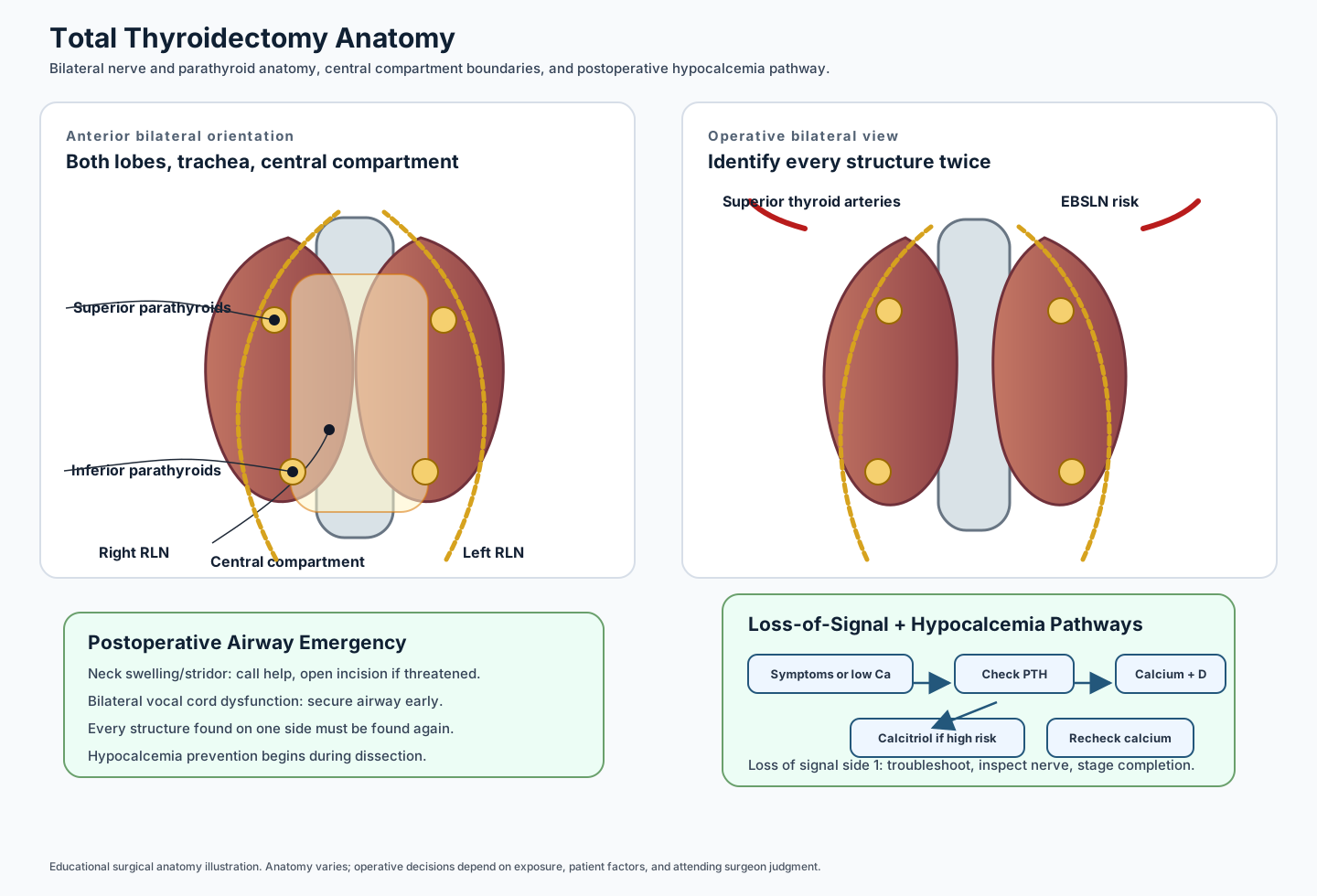
Total thyroidectomy removes both thyroid lobes and the isthmus. It is used for selected malignancy, bilateral disease, Graves disease, multinodular goiter, and compressive symptoms. Bilateral nerve and parathyroid risk make judgment critical.
Confirmed thyroid cancer requiring total thyroidectomy
Bilateral multinodular goiter
Graves disease selected for surgery
Compressive symptoms from bilateral disease
Completion thyroidectomy planning in selected patients
Bilateral recurrent laryngeal nerves
External branch of superior laryngeal nerve
Four parathyroid glands and vascular pedicles
Berry ligament
Trachea, esophagus, carotid sheath
Central neck lymphatic compartment
What: Cervical incision, flaps, strap separation.
Why: Wide safe exposure prevents traction injury.
Pitfalls: Poor exposure leads to bleeding and nerve risk.
What: Control middle vein and superior pole, identify RLN/parathyroids.
Why: One side sets the safety pattern.
Pitfalls: Proceeding too fast risks devascularization.
What: Divide and include pyramidal tissue when present.
Why: Residual tissue matters for cancer or Graves disease.
Pitfalls: Missing pyramidal lobe can affect completeness.
What: Confirm safety before contralateral dissection.
Why: Avoid bilateral RLN injury.
Pitfalls: Ignoring loss of signal is dangerous.
What: Repeat capsular dissection with RLN/parathyroid protection.
Why: Completes thyroidectomy.
Pitfalls: Bilateral parathyroid devascularization causes hypocalcemia.
What: Valsalva, inspect both beds, close carefully.
Why: Postop neck hematoma can obstruct airway.
Pitfalls: Drain decisions do not replace hemostasis.
Click any card to reveal the answer. Use filters for level-specific review or Quiz Mode for one-question-at-a-time board prep.
Realistic case stems that teach operative judgment, prioritization, bailout thinking, and documentation discipline.
These cases are educational examples for surgical learning and documentation awareness. They are not patient-specific medical advice. Actual management depends on patient physiology, anatomy, local resources, attending judgment, and institutional protocols.
Scenario: you lose recurrent laryngeal nerve signal on the first side during planned total thyroidectomy. Troubleshoot, inspect nerve continuity, consider stopping after lobectomy, document clearly, and protect the patient from bilateral vocal cord paralysis.
Neck hematoma: airway emergency; prevent with hemostasis; open wound if airway threatened.
Bilateral RLN injury: stridor/airway failure; prevent by respecting loss of signal; may require airway intervention.
Hypocalcemia: perioral numbness/tetany; prevent by preserving parathyroids; treat with calcium/vitamin D based on severity.
Thyroid storm: prevent with preop control; treat with beta blockade, antithyroid therapy, iodine/steroids/support.
Chyle leak after neck dissection: recognize milky drainage; manage diet, drainage, or reoperation depending severity.
Values below are pulled from the FreeCPTCodeFinder CPT database at runtime so RVUs and estimated Medicare payments stay aligned with the coding engine.
Educational guidance only. This section is not a complete dictated operative note and should not be copied into the chart.
Bilateral nerve risk
Parathyroid preservation
Hemostasis before closure
Knowing when not to do the second side
Precise extent documentation
The dynamic CPT table supplies codes, RVUs, global periods, and estimated Medicare values. The surgeon still has to document the clinical facts that justify the selected code.