Positioning and incision
What: Supine neck extension and transverse cervical incision.
Why: Exposure sets up the entire case.
Pitfalls: Overextension can be unsafe in cervical spine disease.
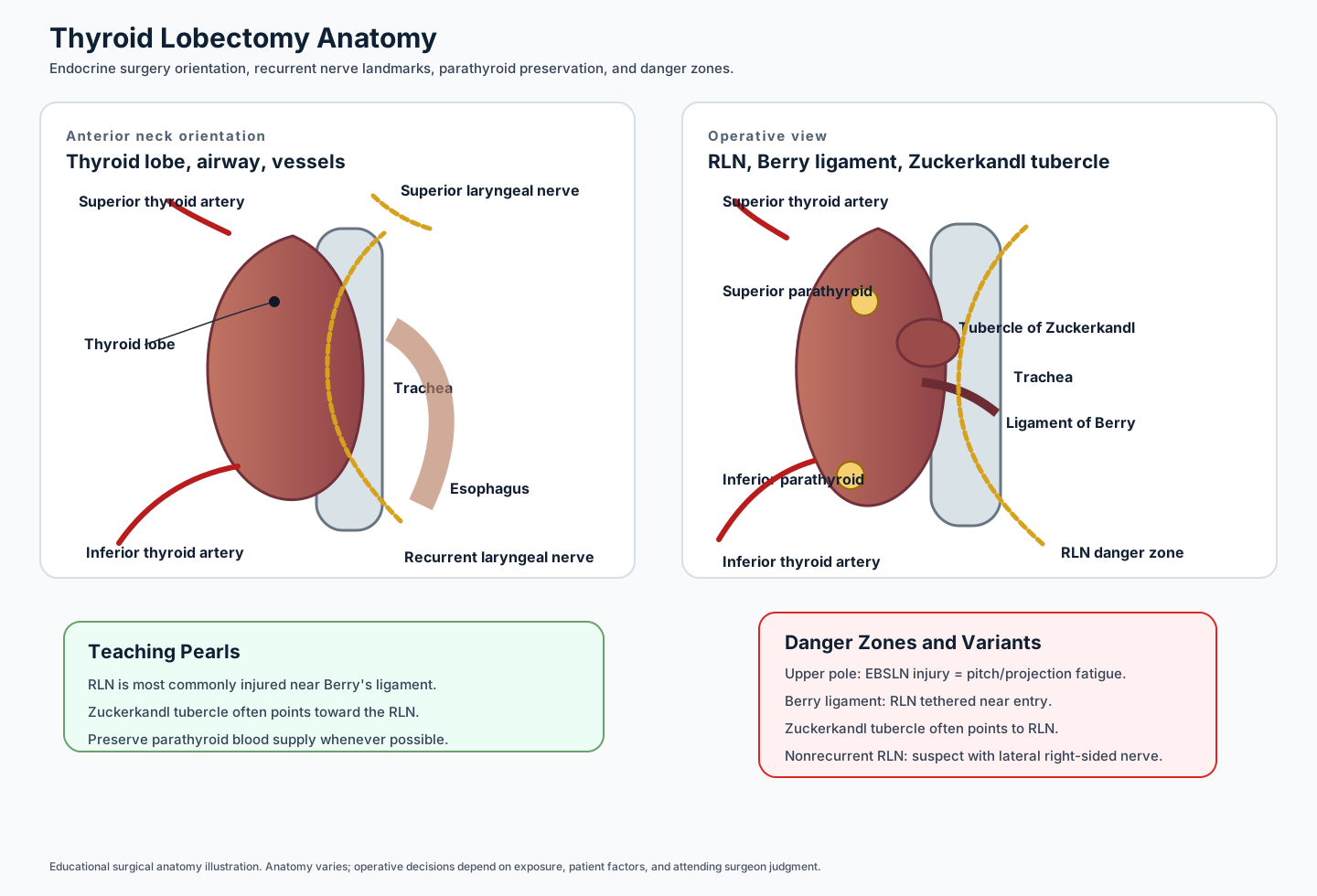
Unilateral thyroid anatomy, RLN and parathyroid preservation, superior pole control, documentation, CPT, and wRVUs.
Thyroid lobectomy removes one thyroid lobe, with or without the isthmus, for selected nodules, indeterminate cytology, unilateral disease, compressive symptoms, or selected malignancy scenarios. The case is anatomy-dense and complication-sensitive.
Indeterminate thyroid nodule
Symptomatic unilateral goiter or nodule
Selected low-risk thyroid malignancy
Diagnostic lobectomy
Toxic unilateral nodule in selected patients
Thyroid capsule and strap muscles
Superior thyroid vessels and external branch of superior laryngeal nerve
Recurrent laryngeal nerve in tracheoesophageal groove
Berry ligament
Superior and inferior parathyroids
Middle thyroid vein and inferior thyroid vessels
What: Supine neck extension and transverse cervical incision.
Why: Exposure sets up the entire case.
Pitfalls: Overextension can be unsafe in cervical spine disease.
What: Raise flaps and open midline strap raphe.
Why: Creates working space with low bleeding.
Pitfalls: Buttonholing skin or poor flaps limits exposure.
What: Retract strap muscles and mobilize the thyroid lobe medially.
Why: Defines lateral capsule and vascular pedicles.
Pitfalls: Pulling hard before vessel control causes bleeding.
What: Divide superior pole vessels close to thyroid capsule.
Why: Reduces risk to external branch of superior laryngeal nerve.
Pitfalls: High ligation can injure voice pitch mechanism.
What: Find and protect RLN and preserve parathyroid blood supply.
Why: These are the core safety objectives.
Pitfalls: Devascularizing parathyroids or skeletonizing nerve aggressively causes complications.
What: Divide attachments and isthmus as planned.
Why: Completes lobe removal safely.
Pitfalls: Thermal injury near RLN at Berry ligament is dangerous.
What: Valsalva, inspect, close straps/platysma/skin.
Why: Neck hematoma can threaten airway.
Pitfalls: Leaving before hemostasis is unacceptable.
Click any card to reveal the answer. Use filters for level-specific review or Quiz Mode for one-question-at-a-time board prep.
Realistic case stems that teach operative judgment, prioritization, bailout thinking, and documentation discipline.
These cases are educational examples for surgical learning and documentation awareness. They are not patient-specific medical advice. Actual management depends on patient physiology, anatomy, local resources, attending judgment, and institutional protocols.
Scenario: nerve signal is lost during lobectomy before considering the other side. Stop, troubleshoot the monitor and anesthesia factors, inspect the nerve, avoid bilateral nerve risk, and do not proceed to contralateral surgery unless the indication and safety case are compelling.
Neck hematoma: recognize swelling/airway symptoms; prevent with meticulous hemostasis; open wound emergently if airway threatened.
RLN injury: recognize hoarseness/vocal cord dysfunction; prevent with identification and careful energy use; manage with laryngoscopy and voice/swallow support.
Hypocalcemia: less common after lobectomy; prevent by preserving parathyroids; check labs if symptomatic.
Seroma/infection: recognize swelling or drainage; prevent with hemostasis and sterile technique; drain or treat if needed.
Values below are pulled from the FreeCPTCodeFinder CPT database at runtime so RVUs and estimated Medicare payments stay aligned with the coding engine.
Educational guidance only. This section is not a complete dictated operative note and should not be copied into the chart.
Calm dissection
Capsular plane discipline
RLN respect
Parathyroid blood supply
Airway hematoma awareness
The dynamic CPT table supplies codes, RVUs, global periods, and estimated Medicare values. The surgeon still has to document the clinical facts that justify the selected code.