Positioning
What: Supine with arms and monitors arranged for lower abdominal work.
Why: Allows safe access, Trendelenburg, and left-side tilt.
Pitfalls: Poor positioning limits pelvic and right lower quadrant exposure.
Appendiceal anatomy, mesoappendix control, stump management, complications, oral boards, documentation, CPT, and wRVUs.
Laparoscopic appendectomy removes an inflamed, perforated, or high-risk appendix using minimally invasive access. The case tests safe abdominal entry, small bowel handling, identification of the appendix base, mesoappendix control, and source control judgment.
Acute appendicitis
Perforated appendicitis requiring operative source control
Appendiceal abscess or phlegmon after appropriate selection
Interval appendectomy in selected patients
Concern for appendiceal neoplasm
Diagnostic uncertainty requiring laparoscopy
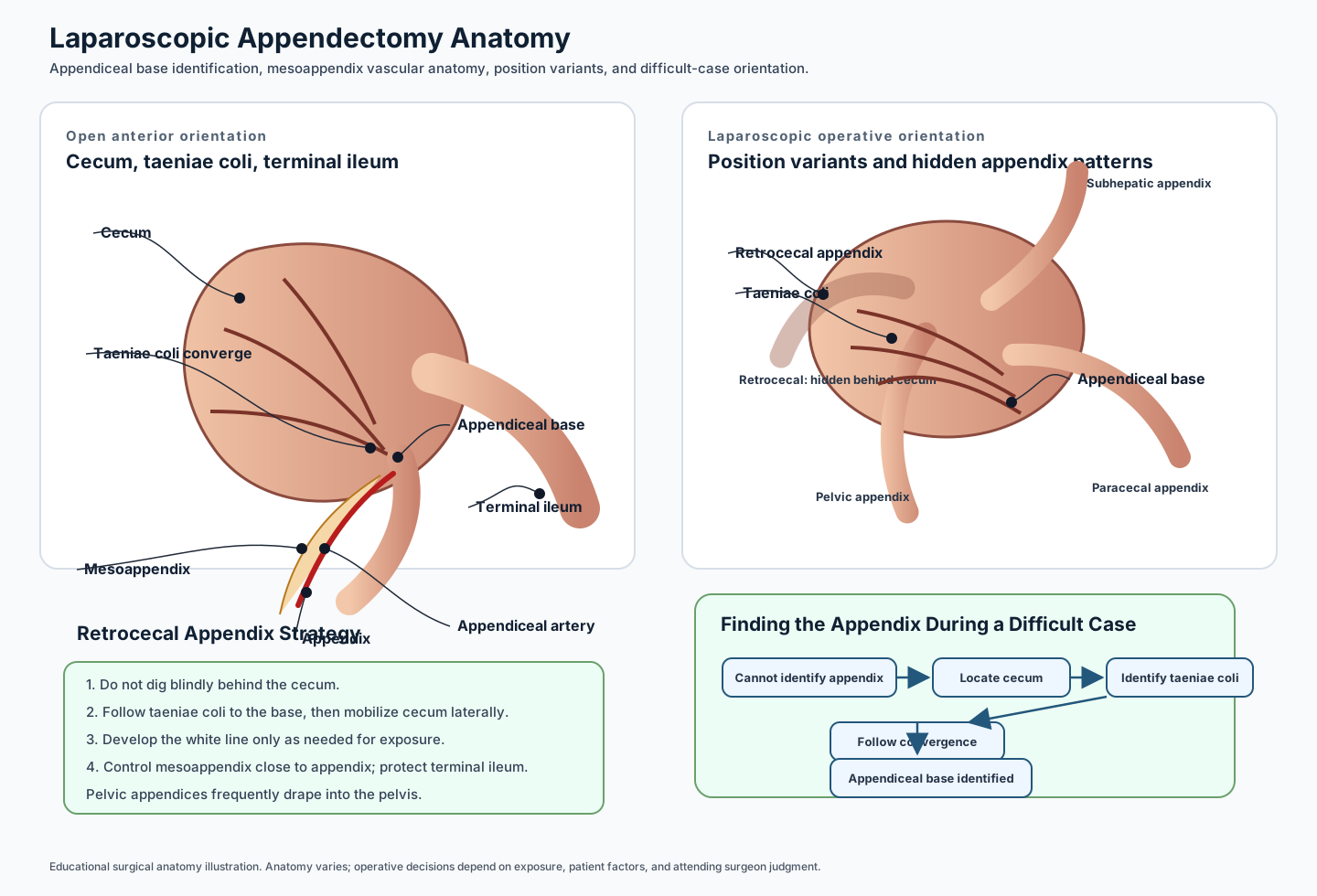
Cecum and taeniae coli leading to appendix base
Terminal ileum and ileocecal valve
Mesoappendix and appendiceal artery
Retrocecal, pelvic, preileal, and subcecal appendix positions
Right ureter and gonadal vessels deep in the retroperitoneum
What: Supine with arms and monitors arranged for lower abdominal work.
Why: Allows safe access, Trendelenburg, and left-side tilt.
Pitfalls: Poor positioning limits pelvic and right lower quadrant exposure.
What: Establish pneumoperitoneum and place camera plus working ports.
Why: Triangulation lets the surgeon work at the appendix base.
Pitfalls: Unsafe entry or ports too close together makes the case harder.
What: Inspect abdomen, pelvis, cecum, terminal ileum, and inflammatory burden.
Why: Confirms diagnosis and identifies perforation, abscess, or alternate pathology.
Pitfalls: Missing diffuse contamination changes postoperative management.
What: Follow taeniae coli to the appendix base when anatomy is distorted.
Why: The base is the key structure; the tip may hide retrocecally or in the pelvis.
Pitfalls: Grabbing inflamed appendix aggressively can perforate it.
What: Divide mesoappendix with energy, clips, stapler, or ligation.
Why: Controls appendiceal artery and mobilizes the appendix.
Pitfalls: Bleeding can obscure the base and cause unsafe stapling.
What: Secure and divide appendix base with stapler, endoloops, or other accepted method.
Why: Prevents stump leak and leaves healthy cecum.
Pitfalls: Dividing through inflamed cecum risks leak.
What: Remove specimen in a bag and irrigate selectively when contamination exists.
Why: Limits wound contamination and manages pus/stool burden.
Pitfalls: Over-irrigation without suction can spread contamination.
What: Inspect hemostasis, remove ports, close fascia when indicated.
Why: Prevents bleeding and port-site hernia.
Pitfalls: Missed fascial closure at enlarged ports causes morbidity.
Click any card to reveal the answer. Use filters for level-specific review or Quiz Mode for one-question-at-a-time board prep.
Realistic case stems that teach operative judgment, prioritization, bailout thinking, and documentation discipline.
These cases are educational examples for surgical learning and documentation awareness. They are not patient-specific medical advice. Actual management depends on patient physiology, anatomy, local resources, attending judgment, and institutional protocols.
Scenario: the appendix base is necrotic and the cecum is inflamed. Do not blindly loop a friable base. Mobilize, assess healthy tissue, consider stapled cuff of cecum, partial cecectomy, drain/source control, or conversion if safe laparoscopic control is not possible.
Bleeding from mesoappendix: recognize field loss or hematoma; prevent with deliberate vascular control; manage with pressure, suction, clips/energy, or conversion.
Stump leak: recognize abscess, peritonitis, or feculent drain output; prevent by dividing healthy base; manage with imaging, drainage, antibiotics, and reoperation when uncontrolled.
Abscess: recognize fever, leukocytosis, pain; prevent with source control; manage with antibiotics and image-guided drainage when drainable.
Bowel injury: recognize enterotomy or delayed sepsis; prevent with safe entry and gentle adhesiolysis; repair or resect as needed.
Surgical site infection: recognize erythema/drainage; prevent with specimen bag and wound care; open/drain superficial infection as needed.
Values below are pulled from the FreeCPTCodeFinder CPT database at runtime so RVUs and estimated Medicare payments stay aligned with the coding engine.
Educational guidance only. This section is not a complete dictated operative note and should not be copied into the chart.
Finding the base, not just the tip
Gentle tissue handling
Knowing when perforation changes the operation
Source control over cosmetic laparoscopy
Clear documentation of contamination and complexity
The dynamic CPT table supplies codes, RVUs, global periods, and estimated Medicare values. The surgeon still has to document the clinical facts that justify the selected code.