Preparation
What: Antibiotics, blood availability, warming, access, and incision plan.
Why: Laparotomy patients decompensate quickly.
Pitfalls: Starting without resuscitation plan creates avoidable risk.
Entry, systematic exploration, source control, damage control decisions, documentation, CPT, and wRVUs.
Exploratory laparotomy is an open abdominal operation performed to diagnose and treat intra-abdominal pathology when nonoperative or minimally invasive management is inappropriate. It is a strategy case: exposure, survey, source control, physiology, and prioritization matter more than speed alone.
Hemodynamic instability with suspected intra-abdominal bleeding
Peritonitis
Bowel ischemia or perforation
Obstruction with compromise
Penetrating or blunt trauma requiring exploration
Failure of less invasive source control
Linea alba and preperitoneal fat
Peritoneum and falciform ligament
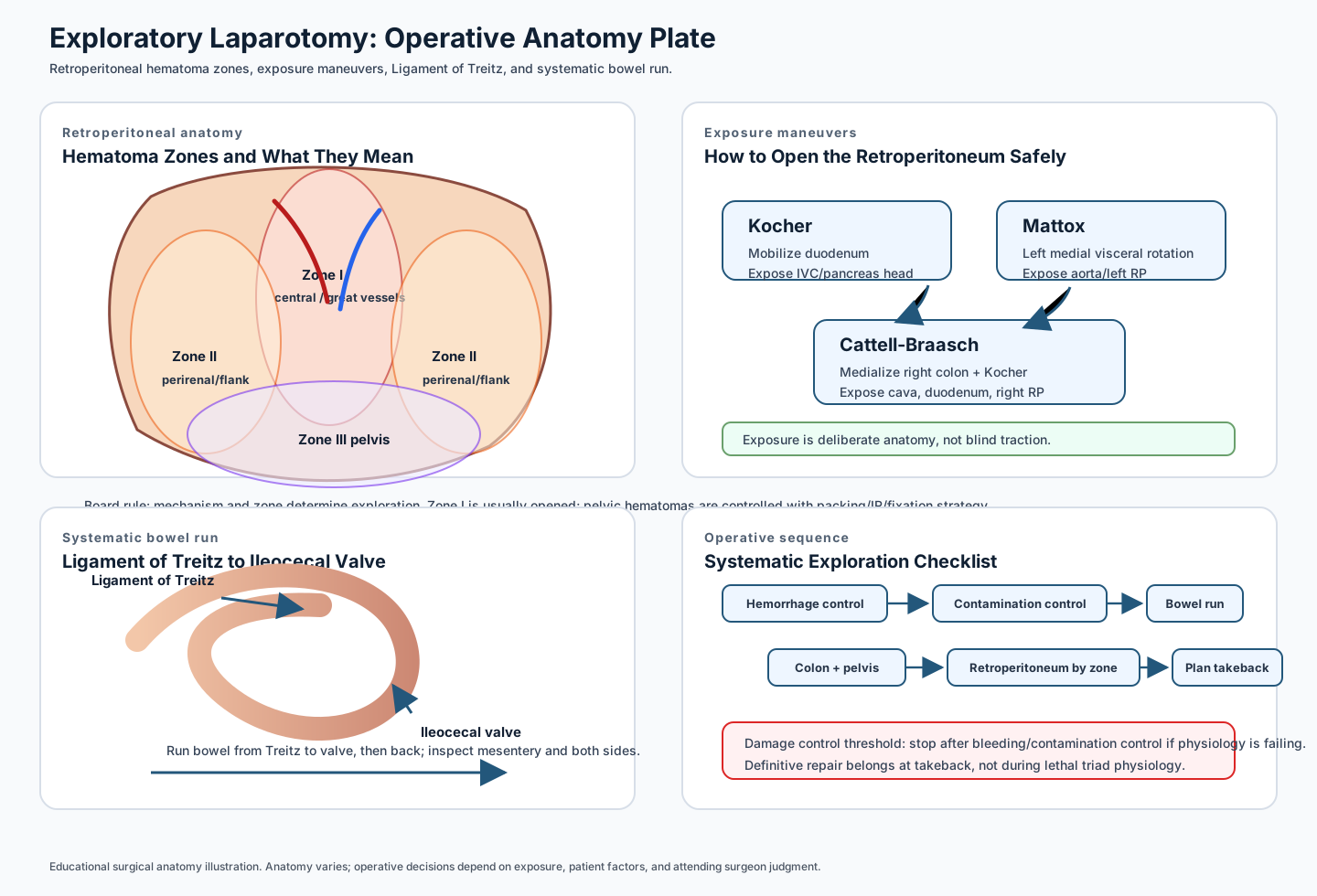
Small bowel from ligament of Treitz to ileocecal valve
Colon, lesser sac, liver, spleen, stomach, retroperitoneum
Major vascular zones and ureters
What: Antibiotics, blood availability, warming, access, and incision plan.
Why: Laparotomy patients decompensate quickly.
Pitfalls: Starting without resuscitation plan creates avoidable risk.
What: Incise linea alba and enter peritoneum carefully.
Why: Fast access with extension options.
Pitfalls: Bowel adherent to abdominal wall can be injured on entry.
What: Suction contamination and pack bleeding quadrants.
Why: Immediate control buys time for survey.
Pitfalls: Chasing every injury before control causes physiologic collapse.
What: Run bowel and inspect solid organs, stomach, colon, pelvis, and retroperitoneum.
Why: Prevents missed injuries.
Pitfalls: Skipping hidden zones leads to delayed disasters.
What: Repair, resect, drain, divert, pack, or temporize based on pathology and physiology.
Why: The operation must match patient physiology.
Pitfalls: Doing too much in an unstable patient kills.
What: Remove packs when appropriate and verify hemostasis/foreign body count.
Why: Avoid retained packs and uncontrolled bleeding.
Pitfalls: Pack removal can restart hemorrhage.
What: Close fascia when safe or use temporary abdominal closure.
Why: Protects viscera and plans re-exploration.
Pitfalls: Closing under tension risks abdominal compartment syndrome.
Click any card to reveal the answer. Use filters for level-specific review or Quiz Mode for one-question-at-a-time board prep.
Realistic case stems that teach operative judgment, prioritization, bailout thinking, and documentation discipline.
These cases are educational examples for surgical learning and documentation awareness. They are not patient-specific medical advice. Actual management depends on patient physiology, anatomy, local resources, attending judgment, and institutional protocols.
Scenario: the patient is cold, acidotic, coagulopathic, and still bleeding. The safe surgical decision is damage control: pack, control contamination, abbreviate, temporary close, resuscitate in ICU, and return for definitive repair.
Bleeding: recognize hemodynamic instability; prevent with exposure and packing; manage with pressure, ligation, repair, or packing.
Missed injury: recognize sepsis/leak/bleeding postoperatively; prevent with systematic survey; manage with imaging or reoperation.
Enterotomy: recognize immediately or by postop sepsis; prevent with careful adhesiolysis; repair/resect.
Abdominal compartment syndrome: recognize high pressures and organ dysfunction; prevent by avoiding tight closure; manage with decompression/open abdomen.
SSI/dehiscence: recognize wound drainage or fascial separation; prevent with source control and closure technique; manage based on depth and stability.
Values below are pulled from the FreeCPTCodeFinder CPT database at runtime so RVUs and estimated Medicare payments stay aligned with the coding engine.
Educational guidance only. This section is not a complete dictated operative note and should not be copied into the chart.
Owning the room during chaos
Systematic survey
Physiology-driven decisions
Clear communication with anesthesia
Knowing when to stop
The dynamic CPT table supplies codes, RVUs, global periods, and estimated Medicare values. The surgeon still has to document the clinical facts that justify the selected code.